Let's be honest: the wellness industry has sold us a lot of nonsense. Goop-style jade eggs, $400 "detox" foot baths, charcoal lemonade that tastes like a campfire regrets. So when I first heard that doctors in the UK and Canada were literally prescribing walks in the park instead of pills, my skeptical antenna went up. It sounded like the softest, fluffiest pseudoscience imaginable.
Except it isn't. The evidence is genuinely hard to argue with — and that's exactly why ecotherapy is quietly creeping into mainstream medicine. Here's what most people miss: this isn't about replacing your cardiologist with a hike. It's about something far more interesting — the medical establishment admitting that the environment you live in is a clinical variable, not just a backdrop.
The Shocking Truth About What Your GP Can't Fix With a Prescription Pad
I've found that the most stubborn health problems in a modern clinic are the ones no drug can touch: chronic stress, low-grade depression, loneliness, the kind of bone-deep exhaustion that eight hours of sleep doesn't fix. Your doctor knows this. They also know that handing you a prescription for an SSRI when your actual problem is that you haven't touched soil or seen a tree in three months is, at best, a partial solution.
This is where the concept of nature prescription gets interesting. In 2020, the UK government funded a £4 million pilot for "green social prescribing" — connecting patients with nature-based activities like community gardening and conservation work. Meanwhile, a growing number of Canadian physicians have been handing out official "PaRx" prescriptions: literally a slip of paper recommending 2+ hours a week in nature, minimum 20 minutes at a time.
Is it a bit twee? Sure. But here's the thing — it's measurable. And that's what separates ecotherapy from the wellness grifters.
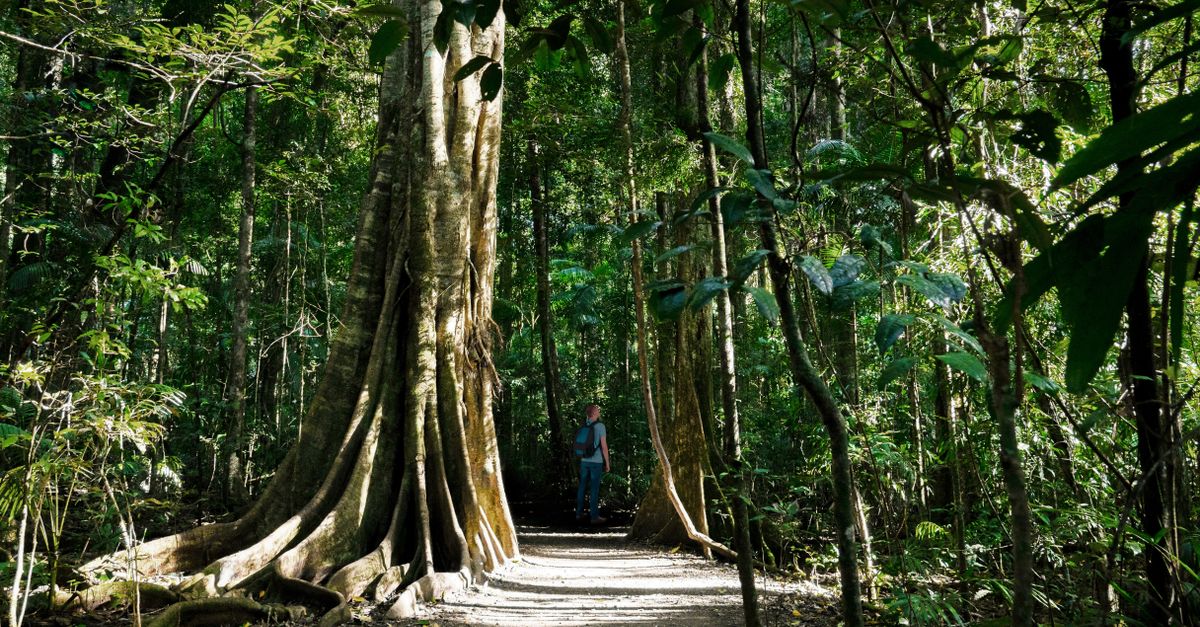
What the Research Actually Says (Spoiler: It's Not Nothing)
Let me hit you with the numbers, because this is where the skeptics like me get humbled.
A landmark 2019 study in Scientific Reports — a sample of nearly 20,000 people — found that spending at least 120 minutes a week in nature was significantly associated with better self-reported health and wellbeing. Below that threshold? No real effect. Above it? The benefits plateaued. In other words, there's a dosage, just like a drug.
Then there's the attention restoration research, which I find genuinely fascinating. Nature doesn't just relax you — it appears to restore "directed attention," the cognitive resource you burn through answering emails and doomscrolling. That's why a walk in the woods can feel more restorative than the same time on a treadmill staring at a wall. Your brain gets to switch modes.
Ecotherapy isn't magic. It's a low-cost, low-risk intervention with a decent evidence base and almost no side effects. In a healthcare system obsessed with expensive, high-intervention solutions, that combination is almost suspiciously good.
Why Your Doctor Is Suddenly Interested in Dirt and Daylight
Three forces are converging here, and they're worth naming:
- The mental health crisis is outpacing treatment capacity. Waiting lists for therapy are brutal. If a structured nature program can help people while they wait — or prevent them needing the waitlist at all — that's a win.
- The loneliness epidemic is now a clinical concern. Gardening groups and walking clubs solve two problems at once: movement and human contact. Doctors are increasingly prescribing group-based ecotherapy for exactly this reason.
- The money argument is impossible to ignore. A park prescription costs almost nothing. The ROI calculation for a health system is almost embarrassingly favorable.
I'll be honest, though — I don't love the framing that nature is just a cheaper alternative to antidepressants. That feels like a way to offload public health problems onto individual behavior. "Go take a walk" isn't a substitute for affordable housing, fair wages, or accessible therapy. Ecotherapy works best as one tool in a toolbox, not a replacement for the whole shed.

The Catch Nobody Puts on the Poster
Here's the part the glossy brochures leave out: nature prescriptions only work if people can actually access nature. And in most cities, green space is distributed along painfully predictable lines — wealthier neighborhoods get parks, poorer ones get parking lots.
That's the uncomfortable equity question at the heart of the rise of ecotherapy. A doctor prescribing a forest walk to someone in a concrete-heavy neighborhood without a car isn't being helpful — they're being tone-deaf. Some forward-thinking programs address this by focusing on micro-nature: street trees, community gardens, even window boxes and balcony planting. The research suggests that even small doses of green matter, which is encouraging — but it's no excuse for not building the parks.
There's also the compliance problem. Prescriptions only work if people fill them. And let's be real — telling a depressed, exhausted person to "go enjoy some nature" can land somewhere between unhelpful and insulting if it's not done with care. The successful programs I've read about pair the prescription with actual structure: a guide, a group, a specific place, a specific time. Vague advice is worthless; socially supported nature contact is where the real clinical value lives.
So Will Your Next Prescription Be a Forest?
I think the honest answer is: partly, and that's fine. You're not going to walk off a broken leg with a nice view of some ferns. But for the sprawling, messy, chronic conditions that define modern illness — anxiety, burnout, isolation, metabolic sluggishness — the medical establishment is finally admitting that the environment is part of the medicine.
What I'd love to see is this becoming more than a trendy pilot program. Green social prescribing needs real funding, real measurement, and real attention to who actually gets access. Otherwise it becomes another wellness perk for people who were already fine.
And here's my challenge to you, since you've read this far: before you dismiss ecotherapy as hippie nonsense or embrace it as a cure-all, try the actual experiment. Two hours a week. Outside. No phone. Notice whether your baseline shifts. That's the kind of data no study can give you — and it's free.
Your move, doctor.
